Skip Navigation

Sleepless Ones

Alive with quiet chaos.
By Michelle Heaven
Bodies drift through detailed worlds where beauty emerges from unrest.
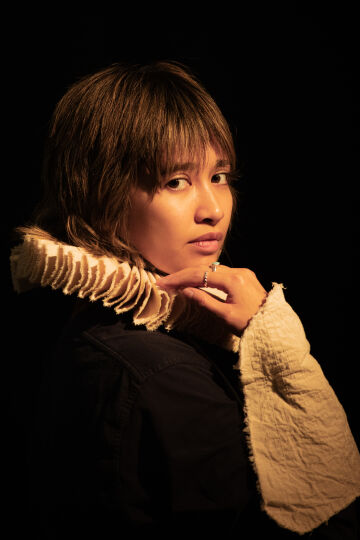
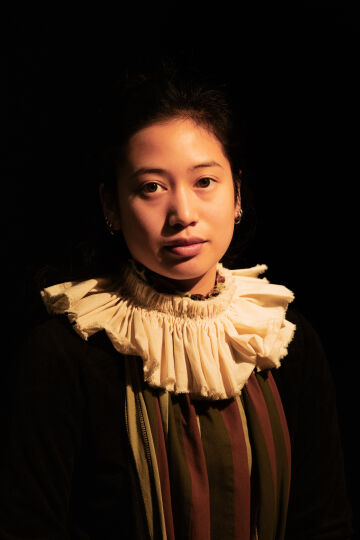
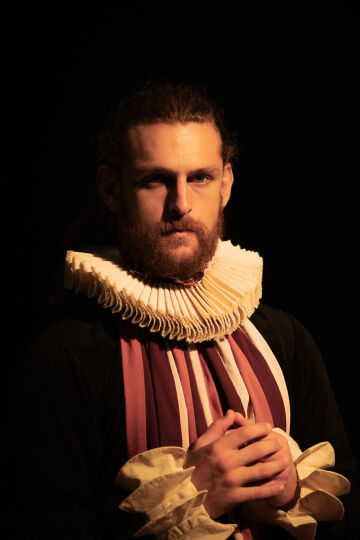
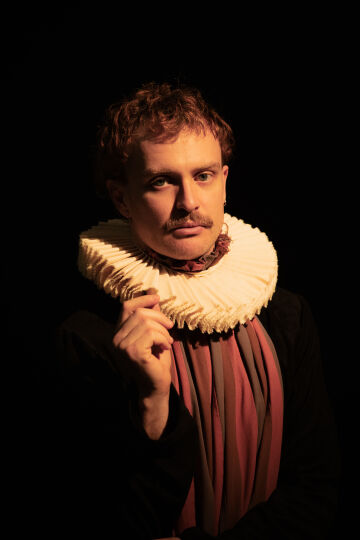
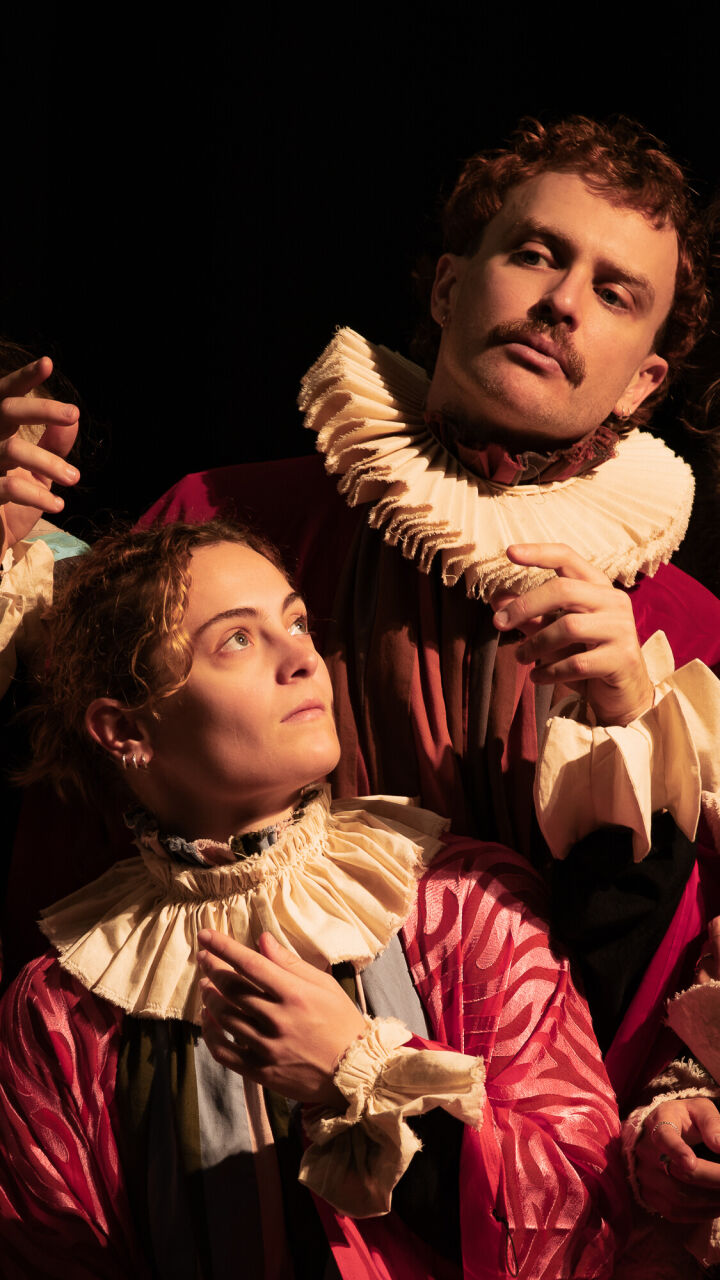
Inspired by the emotional intensity, psychological vulnerability, and illusionistic depth of Renaissance imagery, Sleepless Ones inhabits invented realms charged with light; cloaked in shadow; and alive with quiet chaos.
History and myth are reimagined as caricatures of heroes and fools traverse intimate, surreal and emotionally heightened terrain. Haunted by their own potential, these restless souls find themselves suspended between who they are and who they long to be.
Epic themes.
Intricate detail.
Absurdity that echoes current times.
Award-winning artists Michelle Heaven and Ben Cobham fuse iconic imagery, compelling choreography and filmic scores to deliver a cinematic-like dance experience with Townsville’s celebrated Dancenorth Ensemble. Composition and sound designer Darrin Verhagen and Costume designer Jenni Langford also lend their master strokes to this richly textured and satisfyingly nuanced work.
Sleepless Ones illuminates vibrant physicality and striking visual composition to balance beauty, unease, grandeur and vulnerability.

World Premiere

Credits

CREATIVE CREDITS
Concept, Choreography and Direction Michelle Heaven
Creative Collaborator Ben Cobham
Composition and Sound Design Darrin Verhagen
Costume Design Jenni Langford
Performers/Choreographers Felix Sampson, Sabine Crompton-
Ward, Tiana Lung, Aleeya McFadyen-Rew, Jag Popham, Michael Smith.
PRODUCTION CREDITS
Production Manager Felicity Organ-Moore
Production Technicians Yoshie Kenny and Daniel Lobley
Stage Manager Keely Pronk
Thank you to bluebottle; Ede Shade Solutions; Queensland Signage Solutions; Specialist Lighting Distributors Melbourne (SLD); TheatreiNQ; Townsville Civic Theatre; Trish Jones; Wes Bluff (Krank’d Productions).

Acknowledgements

Sleepless Ones is supported by the Queensland Government through Arts Queensland, and the Ian Potter Foundation.
Dancenorth Australia is assisted by the Australian Government through Creative Australia, its principal arts investment and advisory body, and the Queensland Government through Arts Queensland, and by Townsville City Council. Dancenorth is supported by the Tim Fairfax Family Foundation and receives funding from Creative Australia through the Australian Cultural Fund.

Warnings

This performance contains partial nudity, a prolonged total black-out and extended periods of low light; loud noises; extreme quiet; and strobe.

Accessibility

Dancenorth is located on the corner of Walker and Stanley Streets in Townsville City.
The ground floor of the venue is fully accessible, this includes the Dancenorth Theatre, foyer, bar, main offices and wheelchair accessible toilet. The main entrance is located at Stanley Street and accessible via wheelchair lift.
For more accessibility information, visit https://dancenorth.com.au/about/access-and-inclusion-

Additional Information

For more information or to ask any questions about the show, contact us:
Phone: (07) 4772 2549
Email: admin@dancenorth.com.au

Performance History

Dancenorth Theatre

Gurambilbarra (Townsville City)

2026
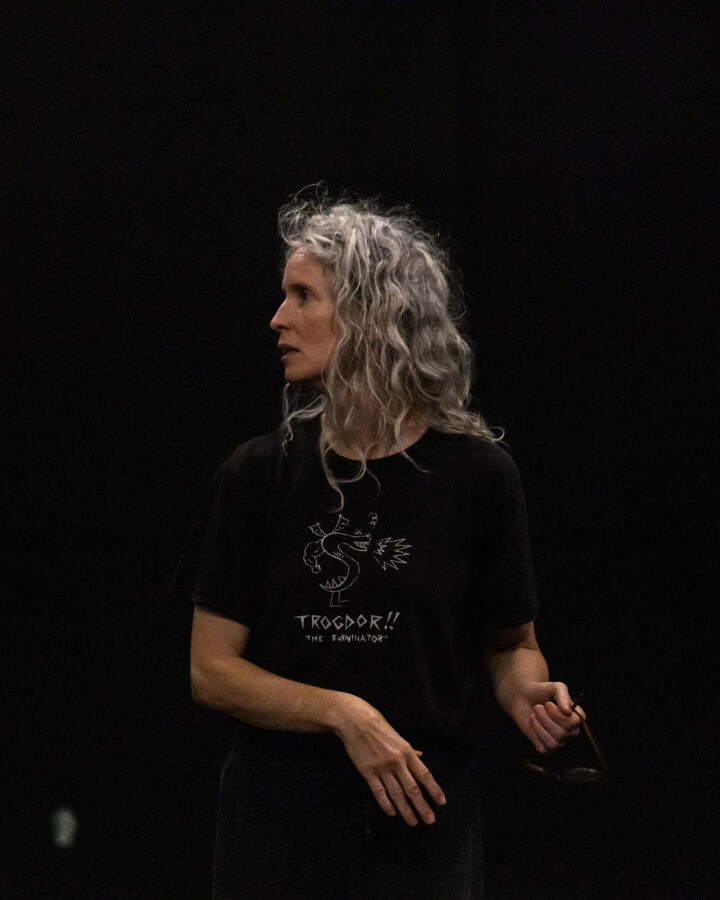
Michelle Heaven

Director's Note

It has been an incredible honour to work with Dancenorth in Gurambilbarra across the past three years, and I am very excited to finally share Sleepless Ones. My time here - the people and places I have encountered, both in and outside of the studio have helped shape this work. The Regional Gravitation program has provided me, and so many others, a wholly unique opportunity rarely afforded to independent artists. I am deeply grateful for this opportunity and phenomenal experience - I will cherish it forever. 


As a maker, I am interested in a sense of mystery and in blending what is real with a sense of the intangible. Paintings, particularly those from the Italian Renaissance, capture suspended moments, depicting worlds that feel recognisably human while also existing outside of my known reality. I was interested in the textures, the density, light qualities, how it might feel to be inside them, and how they might begin to move. 


Ultimately, I am interested in human vulnerability and the ways in which we are pushed and pulled as we attempt to process and circumnavigate ourselves and the world around us.


A special thank you to Dancenorth, the incredible dancers, and magnificent creative team who have enabled the realisation of Sleepless Ones. 


About Michelle Heaven 

Michelle is a choreographer, performer, and movement consultant whose practice spans dance, theatre, and circus. Michelle creates bespoke works and audience experiences that invite curiosity, connection, and deeper meaning. 


Michelle has presented work at national and international arts festivals, and collaborated, performed, and choreographed with companies/artists such as Chunky Move, Lucy Guerin Inc, Balletlab, Restless Dance Theatre, Chamber Made Opera, Helen Herbertson, Sue Healey, Polyglot Theatre, and Circus Oz. 


Michelle is a Helpmann Award nominee, a multiple Australian Dance Award nominee, and a recipient of the Dame Peggy van Praagh Choreographic Award and several Victorian Green Room Awards. She is honoured to be the 2024 recipient of the Australian Children’s Theatre Fund Joan and Betty Rayner Fellowship for professional development and research in theatre for children, as well as the recipient of the 2025 Dancehouse Compositions Commission. In 2025 Michelle continued working with Lucy Guerin on her new work, and premier her work with Ben Cobham, The Lensical, co-created with Restless Dance Theatre, at DreamBig Festival.


Since 2024, Michelle has been working alongside the Dancenorth Ensemble through a series of creative residencies, developing her latest full-length work, Sleepless Ones, set to have it's World Premiere at North Australian Festival of Arts (NAFA) from 1-3 October 2026.
Q&A with the maker

Sleepless Ones draws inspiration from Renaissance imagery by artists such as Rembrandt, Botecelli and Michelangelo. What is it about these images that captured your attention?

I was often responding to the feeling inside a painting and attempting to distil its emotional quality. A painting captures a suspended moment; through dance, I became interested in what might precede or follow that moment, and how the image could begin to move.
I was drawn to the physicality of the figures: their gestures, expressions and relationships to one another, as well as the dramatic arrangements of bodies and objects within the frame. There is often a heightened quality to these images - a world that feels recognisably human while also existing slightly outside reality. In the studio, this led to explorations of physical transformation through the body, the arrangement of bodies and objects in space, and incorporating props and physical relationships to build and disrupt scenes. Rather than simply replicating the paintings, I was interested in what might emerge when we attempted to embody their emotional and dramatic qualities.
An aspect of conflict for me in relation to many Renaissance images is their association with wealth, status, kings and queens. Our world is still full of people who perceive themselves as kings. This is difficult to ignore. While I am drawn to the beauty and drama of these images, I am also conscious of what they represent and the ‘cost’ associated with power. I am interested in how we might present these images of power while simultaneously undermining them by inviting questions about what lies beneath.

From where else did the ideas in this work originate?

Sometimes it is the arrival of an unexpected image, a dream that surfaces, or a feeling that seeks to be unravelled. I am inspired by a variety of things including our relationships with each other and with nature. I am motivated to create through listening (internal and external), and through witnessing ‘moments of unfolding’ before working to replay or make sense of the intangible parts of such experiences. I find inspiration in the mundane and beauty in the suspension of energy. I seek mild distortions of reality and ways to evoke feeling through motion.
Film became an important part of the development. I worked with scores largely from historical dramas and horror films to establish mood and inspire choreography. We deconstructed scenes from older films, such as The Agony and the Ecstasy (Reed, 1965), which dramatises Michelangelo painting the Sistine Chapel. The Last Judgement influenced a section choreographed to part of the score from the 1976 horror film The Omen, exploring the hierarchy of ‘above and below’ and the turmoil of human experience in between. Other films, such as A Man for All Seasons (Zinnemann, 1966), inspired more humorous explorations of grandiosity and fantasies of becoming bigger than oneself.
Sleep, or the lack thereof, arrived later in the process in response to the rhythm of the developing material – from yearning, turning and wide-eyed stillness to movement again. Whether awake by day or sleepless at night, we are often spinning fantasies. The following passage about daydreaming by Jonathan Gottschall reflects aspects of the characters within the work:
“We daydream about the past: things we should have said or done, working through our victories and failures. We daydream about mundane stuff, replaying events and imagining different outcomes. But we also daydream in a more intense, story-like way. Our wishes — vain, aggressive, dirty — come true. We even screen little horror films, in which our worst fears are realised.” (Gottschall, 2012, Marginalian).

What are you most interested in creating, exploring and expressing in your works?

I strive to capture human dimensions with subtlety, nuance and choreographic drama. I am drawn to the beauty of imperfection evident in early film, painting and photography. Grain-heavy film, for example, carries textures and chemical variations that somehow make an image or subject feel more tangible. I often find myself ruminating on, or wanting to dive inside, the feeling of such imagery. I think this is partly why I am drawn to dance. I love its capacity to suggest ideas while leaving room for personal interpretation.
In creating work, I am drawn to a sense of mystery and finding a blend of the real and the intangible. I’m interested in the past, in images from another time, and in playing with illusion. In Sleepless Ones, this extended to older film scores and their rich, often orchestral complexity – their capacity to evoke mood, heighten facial expression or suggest complex emotional states. I loved playing with the musicality of these scores, alongside composer Darrin Verhagen’s more contemporary compositions, and exploring how they could inspire a world of motion.
Ultimately, I’m interested in offering a kind of window into the soul: into human vulnerability and the plight of another, as they are pushed and pulled while attempting to process and circumnavigate themselves and the world.

Sleepless Ones is described as a ‘cinematic-like dance experience’, how have you achieved this in a live performance work?

The work delves into aspects of illusion, something I am often interested in as a maker. Through the specific use of light and physical devices, we support or transport the body in less familiar ways – figures magically recede, appear, or even float.
The visual design affects what the audience can and cannot see, allowing us to reveal and conceal information and direct the audience’s gaze. In cinema, framing, cuts, close-ups, entrances and exits, and light all guide where we look. In Sleepless Ones, we play with similar ideas through choreography, lighting and design, while retaining the immediacy of live performance.

What does your creative process look and feel like when developing a new work?

Sections of Sleepless Ones have emerged through responding to images, passages of text, inspiration from the dancers response to different tasks, chance encounters and specific limitations. For example, Dancer Felix Sampson was carrying an injury during one of my visits, limiting his physical capacity at that time. Placing him on a rolling device allowed us to circumnavigate the injury while simultaneously uncovering unexpected choreographic explorations.
I am often drawn to these accidental discoveries and have a habit of acquiring whatever is lying around. This is how the foam found its way into the work. I became interested in its ability to highlight a movement, amplify a thought or feeling, or quite literally point things out. The tiniest wiggle of a finger, for example, could suddenly be amplified. I found the absurdity of these shapes moving through space, and the clear arcs of their movement, quite beautiful.
As the work develops, I become more conscious of the audience’s journey: where their attention is being drawn, what information is being revealed or withheld, and the rhythm and accumulation of the work as a whole. I am interested in creating space for an audience to make their own connections rather than determining exactly what they should think or feel. For me, the creative process and the audience experience share something important: the opportunity to enter another person’s way of seeing and experiencing the world.

How have you collaborated with the other creatives to bring this project to life?

Sleepless Ones has been created over 3 years, as part of Dancenorth’s program The Whole Thing, which supported the work from initial idea to final performance. It’s been developed with the Dancenorth Ensemble, in short creative intensives of 2 or 3 weeks at each stage since 2024. While I and some of the dancers have remained constant, several performers have changed, and the creative collaborators did not officially join the process until the final development in 2026.
Ben has supported the work in multiple capacities including the visual design. We’ve spent many hours discussing how best to ‘frame’ the work and settled on the existing concept after building a model and conducting a series of tests.
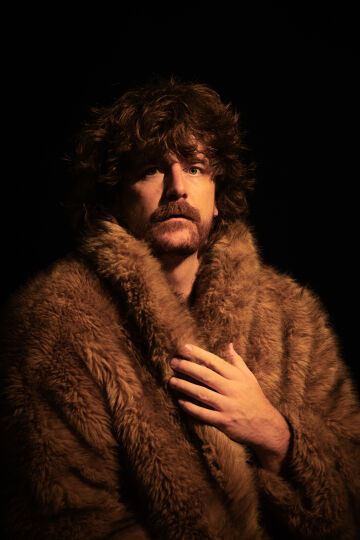
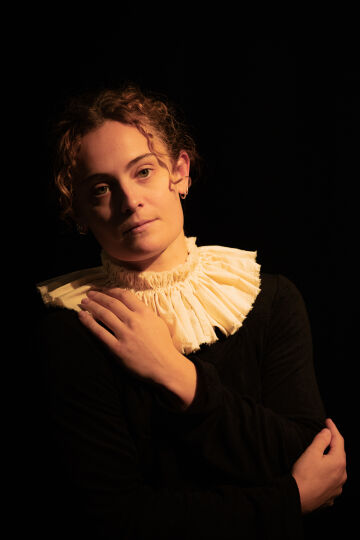
Costume designer and maker Jenni Langford has created a stunning mix of costumes that draw on aspects of Renaissance clothing and colour while retaining a more contemporary feel. With their many handmade components and intricate details, Jenni’s costumes help highlight the displaced protagonist as an individual somehow in the wrong setting. We worked closely across many meetings, exchanging images and considering the costume design in relation to the work’s themes and concepts, and how this might track across different scenes.
Throughout the process, I enjoyed responding to music, and certain tracks became a driving force in the development of material. This has perhaps made composer Darrin Verhagen’s job more complicated. I am very grateful to work with Darrin, a long-term collaborator whose experience, knowledge and skill have enabled us to establish a unique sonic world for Sleepless Ones. Darrin has worked masterfully to weave and interconnect existing scores from a mix of genres with his own compositions – a delicate and complex task that has enabled the eclectic parts of the work to speak more cohesively as a whole.
Each of these collaborations has helped bring greater cohesion to the many different worlds and ideas accumulated across the development of Sleepless Ones.

What has the Dancenorth Ensemble brought to the work?

Their generosity of spirit, and extraordinary physical and creative skills enabled me to take a deeper dive into the creative process and follow tangents that might otherwise have been discarded. They are sublime movers, generous collaborators, responsive, intelligent thinkers and creative problem-solvers, all with excellent senses of humour. This is the perfect blend for me.
Their openness and willingness to experiment allowed ideas to shift, expand and sometimes move in unexpected directions. The work has been deeply shaped by what each dancer has brought to the room and by the chemistry of the Ensemble as a whole.
SUPPORT US

TRUE ART TAKES TIME

Sleepless Ones has been carefully crafted by Michelle Heaven with the Dancenorth Ensemble over three years, and is the first work to be produced as part of The Whole Thing program.


The Whole Thing funds independent artists to create new Australian work, from the seed of an idea through to presentation; and with the full support of Dancenorth: our dancers, production team, administration, marketing and – ultimately – you, our audience.


Dancenorth is committed to investing in independent artists, through a suite of programs collectively titled Regional Gravitation.


Since 2019, Regional Gravitation has provided paid engagement to more than one hundred independent dance artists. While it’s not the primary intention for our residencies to deliver an economic or artistic return beyond an artist’s time in the studio – they continually do.


In 2026, Dancenorth’s program includes four works borne from Regional Gravitation residencies – Plagiary by Alisdair Macindoe, the National tour of Chris Dyke’s Lighting the Dark, and the world premieres of Zane Saunders’ PREFACE and Michelle Heaven’s Sleepless Ones.


We need your help to continue supporting artists – and in turn, audiences – in this way.


You can support Dancenorth’s Regional Gravitation program, as well as the creation and touring of new works, and our beloved Community Experience program by making a tax-deductible donation today.


Together, these three programs deliver immeasurable but undeniable artistic, social and economic impact for the communities we serve.
Our mission is to build local, national, and international connections and resilience through dance for all to thrive.